Launching your freelance business feels amazing.
No more boss.
No more rules.
Nobody forcing you to work on something you have no interest in.
No one time tracking your every move.
That flexibility and autonomy is something you’ve dreamed about for years right?
But there’s a downside if you take that idea of freedom too far. Deadlines can slip if you ignore timelines, or worse, push yourself too hard and you risk burnout.
Freelancing is a great way to earn a living, but keep in mind many new freelancers fail to earn a living wage in their first year.
Why does this happen?
While there’s no one right answer to this question, one theme does come up time and time again.
New freelancers aren’t very good at time tracking.
I’m not saying they don’t think about it, they just don’t know how to go about it. It feels like a major burden and not at all what you signed up for.
I get it.
I’ve been there.
The good news?
There are simple tools and methods you can start using today to get better at time management.
Tracking your time more closely will allow you to operate a professional, profitable, and productive freelance business.
Ready to learn why most freelancers struggle with time tracking and how you can avoid the pitfalls?
Let’s take a closer look.
The Reason Freelancers Fail With Traditional Time Tracking Methods and How to Avoid It
If you asked me in my first year as a freelancer what I though about the idea of tracking my time I probably would have looked at you like you were an alien.
Why would I track my time?
I win a client, they give me a project, I complete it, and they pay me. Simple right?
If only it WAS that simple.
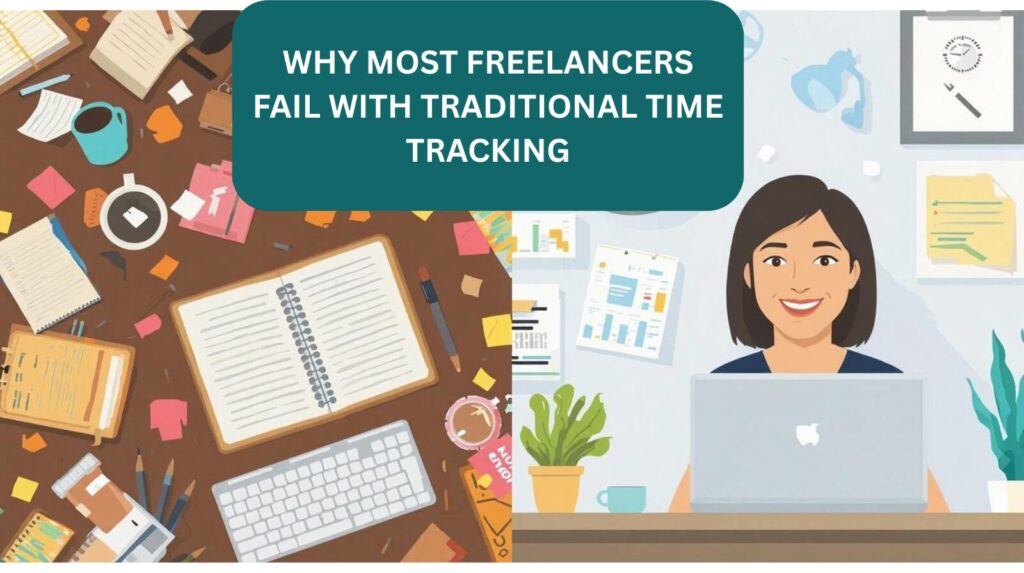
If you don’t track your time, how do you know what to charge? You’ll almost always leave money on the table.
Relying on your memory or a basic manual system isn’t much better. It’s human nature to look for short cuts and that leads to failure.
Why Manual Time Tracking is a Recipe for Failure
After a few months of freelancing, I started to get a sense that I was leaving money on the table by not properly tracking my time.
No problem, I started recording times in a notebook and transferring them to a spreadsheet later.
Simple right?
Wrong!
Half the time I’d forget to do it and my times never seemed to add up.
I’d be willing to bet a lot of new freelancers share this same experience (the ones I talk to sure do).
These systems are prone to human error.
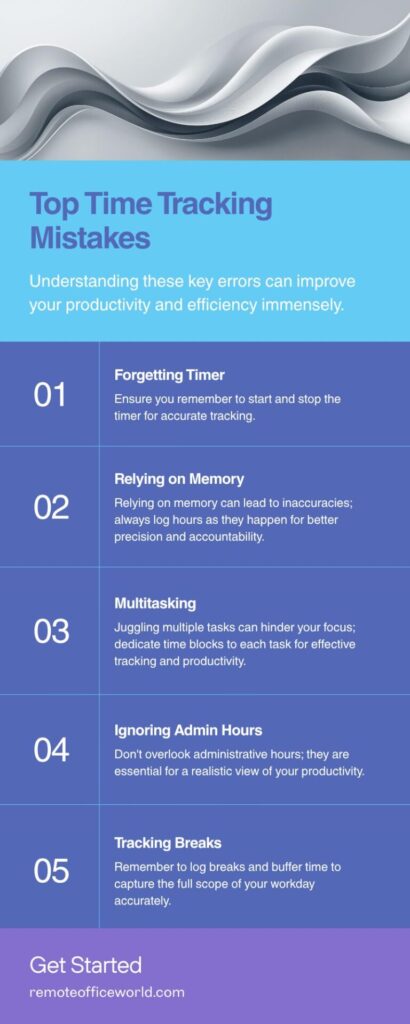
Sure you can use a timer on your phone, but what happens when you forget to start that timer? What happens when you get distracted and spend 15 minutes looking at kitten videos instead of client work?
At best, your manual time tracking methods will give you a loose guestimate of what you should be billing your client.
It’s better than nothing, but it won’t give you a clear picture.
Again.
Let me shout this from the rafters — you’ll be leaving money on the table!
Why Your Mindset May Be Killing Your Productivity and Costing You Time
Let’s say you’re great at hitting that timer. You remember every time. You’re the exception to the issues we’ve just talked about.
No need to use any other tools or methods right? You’ve got this time tracking thing nailed!
Well, probably not.
Even if you’re great at hitting that timer before starting any client work, there’s a good chance your mindset is getting in your way.
Here are some common examples of how our own habits can crush our productivity:
- The Myth of Multitasking: If I won the lottery every time I heard someone tell me how great they are at multitasking I’d never have to work another day in my life. Multitasking is a myth. Nobody can concentrate on more than one task at a time, and every time you switch your focus, your productivity tanks. It can take more than 20 minutes to get back on task. It’s also, almost impossible to accurately track your time when you’re “multitasking.”
- The Procrastination Hurdle: When you have a big project sitting on your schedule, it can feel overwhelming. More than a few times over the years I’ve been tempted to procrastinate under that kind of pressure. Just a few minutes doom scrolling right? It’s one of the main hurdles we face as freelancers. Knowing there’s a timer running in the background helps prevent that mindset from taking hold. When we’re under the clock, we tend to focus more, get distracted less, and that makes us more productive overall.
- Anxiety and Worry: Worry and anxiety can be a tricky thing. We all question whether we’re doing things the right way at some point. Will you be able to finish the job? Will the client like it when you do? These are common questions. You can learn more ways to sharpen your focus and improve productivity in The Complete Guide to Freelancer Productivty. You might also be hung up right now on whether you’re going to choose the right time tracking tool! Stressing out over little details is a common problem among freelancers. Strengthening your mindset, by being more willing to chalk up a mistake up as an opportunity to learn is a good first step in getting past the anxiety and worry.
Tracking Hidden Costs: How to Avoid Undervaluing Your Time
One of the great things about being a freelancer for more than a decade is that I’ve had a lot of time to make mistakes and learn from them.
Bonus for you!
I can help you avoid making the same ones.
One big thing I’ve discovered over the years, is that freelancers (Guilty as charged!) tend to undervalue their time even when they consciously track it.
Sure we track the time we’re writing, designing, drawing, building etc., but we forget about the other client related activities.
Don’t Let The Admin Tasks Fall Through The Cracks
If I could tell you to change one thing about your freelance business right now that would make you a ton more money it would be this: start accounting for non-billable hours!
It’s fairly easy to track those billable hours spent on your core work such as writing for clients in my case. But what about all of that time you spend on marketing, administration, and client communication?
Your time isn’t free.
For every client you take on there will be administrative costs. Think drawing up contracts, sending off invoices, setting up payment methods.
These all take time.
Sure it’s not always easy to assign them to one client. But you need to track them so that you can get a handle on your schedule, identify where you’re spending too much time on unproductive tasks, and find areas where you can improve.
Track every second you spend on your business. Eventually, it becomes second nature and you can adjust your rates to reflect the time spent on this side of your business as well.
It all helps you to better understand the real value of your time.
Make Sure to Include Breaks and Buffer Time
Let’s go back to 2014 for a moment. I’m a new freelancer and I have 5 projects on the go. I’m cooking! I’ll be making six figures at this in no time right?
Nope!
Within 3 months I was overwhelmed, burnt out, and ready to walk away.
You can’t sustain a non-stop pace as a freelancer. Making time to take breaks is essential to your success.
If you ignore this rule you’ll find yourself struggling with mental fatigue, having difficulty concentrating, and you WILL make mistakes.
Here’s how you fix it:
- Time your sessions using methods such as the Pomodoro Technique. Work for 25 minutes then take a break, repeat this cycle a couple more times and then take a longer 30 minute break. Remember to pause your client time tracking during breaks. This way your client gets your best work, is also billed fairly and you run less risk of burnout.
- Build buffer time in your day. Unexpected things happen almost every day. When you’re setting aside time for a project anticipate this. Include buffer time for every project so you can handle these unplanned for interruptions, with minimal impact on your overall project timeline.
How to Leverage Time Tracking to Maximize Your Freelance Income
Let’s be real.
Time tracking isn’t about making you feel better or just being more accountable.
You want to track your time so you can charge the right rates and make more money!
It’s all about financial growth and sustainability.
When you reach out to those old clients and you want to justify higher rates, being able to explain the demands on your time is the most important tool in your toolbox.
If you discover that a client is undervaluing your services and they aren’t willing to adjust, it’s time to find better clients!
Why a Flat Rates Work – and How to Set Yours
I’ve yet to meet a freelancer out there that’s killing it charging by the hour. They may exist, but I don’t know them!
For me, hourly work feels like the same old trap as the corporate hustle. You grind away and never quite reach your potential.
Just because you power through a 1000 word draft article in 30 minutes, does that mean you should only be paid for 30 minutes of work?
Absolutely not!
You shouldn’t be punished for being good at what you do. Freelancers should only be judged on the quality of their work and nothing else.
If you’re ever going to be able to reach that next level as a freelancer, you have to make the transition to fixed rate billing.
A good writer, designer, or artist might be able to complete 3 top quality projects in the time it takes a novice to complete one. They should not be paid the same hourly rate.
Flat rate billing allows you to break free from this trap and start taking your earnings to the next level.
But before you can get there, you need to have a better understanding of what you spend your time on. Otherwise you will continue to charge less than your value.
Start with hourly work, tracking your time as you go through each project. Once you truly understand how you spend your time as a freelancer, then you can begin the change over to fixed rate billing.
When I say track your time I mean every little sub-task.
Track everything!
For example, as a video creator you might track time spent on script writing, editing, researching, finding b-roll, and publishing. You need to know how long each step in the process takes before you can bill clients properly for your time.
For more insights into why it’s important to move beyond hourly work, check out episode 13 of The Freelance Insider Show podcast, How to Scale Your Freelance Business.
Use Your Time Tracking Blueprint to Create True Profitability
Now that you have your time tracking blueprint under your belt, you can make better financial decisions. It allows you to do three core things that can take you from a struggling freelancer to a successful one:
- Choose The Right Clients: Before I started tracking my time closely, I still had a sense that some clients where sucking up too much of it and not paying me any more for the extra effort. When you track your time better, it’s easy to identify these clients and cut them loose. Just because a rate sounds good, you may actually be losing money because of the demands that client makes on your time. Discover how to build stronger, more sustainable client relationships in episode 12 of The Freelance Insider Show, Building Longterm Freelance Client Relationships.
- Make Better Decisions: When you understand how you’re spending your time with each client, you can make better decisions about the long-term relationship. Perhaps you’re okay with them being a little more demanding, as long as they’re willing to pay a higher rate. You don’t always have to end the working relationship with a client because they’re a little demanding, but you should always be paid a fair rate for your time, and I mean all of your time!
- Eliminate Guess Work: You should never just guess how long you think a new project will take you. That doesn’t serve your client well and it won’t help your pocketbook. Within your first few freelance projects, you should start to get a good feel for how much time different types of projects will take you. That allows you to make a more accurate assessment of how long you’ll need to complete the work and what you should be charging. Remember to always factor in revisions and time for meetings (Physical or virtual) in your project timeline.
Better Tools and Techniques for Time Tracking as a Freelancer
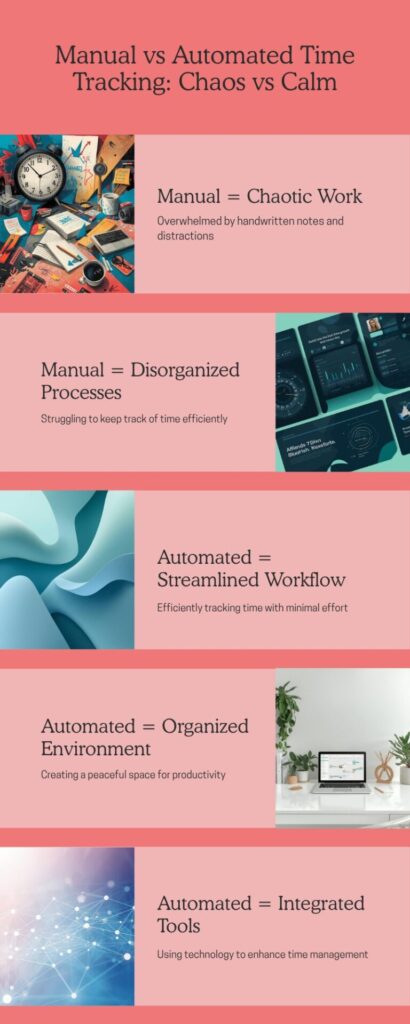
At this point you’re probably thinking, okay I’m sold!
I need to do a better job of tracking my time as a freelancer if I want to make real money and I shouldn’t just rely on basic manual methods.
That sounds great right?
But what’s next?
If you want to begin taking time tracking seriously you have to start using technology better and you have to build an effective system.
Let’s take a look at what that looks like.
It’s Time to Automate Your Time Tracking
My first few attempts at time tracking were an absolute failure!
I’d heard about the Pomodoro Technique, so I figured I’d just set a timer on my phone, get to work and record each session in a Google Sheets doc.
Easy right?
Not so easy.
I kept forgetting to start the timer, or I’d forget to record my sessions in my spreadsheet until later in the evening. Then I started worrying if I was properly recording how many sessions I really did that day.
If you’re like I was, and you tend to forget to hit “start”, on your timer, it’s probably time to consider an automation tool for your time tracking.
There are tons of these out there and they allow you to start recording your laptop (or other devices) in the background. You never have to worry about turning your timer on or off again! They’re truly a game changer.
You can do a quick search for these types of tools and you’ll come across a dozen or more, but there are three I’d place at the top of the list for consideration:
- Clockify — it’s the best overall, has a great free version and it provides detailed reports
- Harvest — This one’s easy to use, works on desktops and mobile, and also has good reporting
- Toggl Track — Great because it has a simple interface, offers easy to use one click timers, and might have the best free plan around
Time Tested Winning Techniques for Time Tracking
Once you choose a good tool, you can’t just set it and forget it. You still need to add time management techniques to successfully implement these tools in your day.
Here are the three techniques I do every day as a freelancer that you’ll likely find helpful as well:
- Integrate Time Tracking to Your Workflow: At the start of every day, I launch Clockify. It’s part of my routine. This is before I do any work on a project. Overtime it becomes second nature, it’s a habit just like brushing your teeth or walking the dog. At that point it won’t feel annoying, it’s just something you do.
- Assign Blocks of Time for Tasks: At the end of every week I take time to build my schedule for the next week with Trello. I create blocks of time each day for specific tasks. This helps me stay focused and on track. For example, I might block 40 minutes for writing a draft for one client, 30 minutes for a video call with another and so on. As mentioned earlier, I would never recommend jumping between tasks. Complete one time block before moving on to another.
- The Pomodoro Technique: As I write this there are 20 minutes left on the 40 minute timer I set based on the Pomodoro Technique. The standard technique calls for 25 minute timed focus sessions, but through trial and error I’ve found 40 minutes works best for me, followed by five minute breaks. You can adjust the intervals until you find something you’re comfortable with, although I wouldn’t go much beyond 45 minutes. It’s hard to stay focused for longer than that in one session. At the end of your session, your timer alerts you to take a break — never skip this part!
Shifting Your Mindset As a Freelancer By Setting Boundaries and Achieving True Balance
We’ve touched upon mindset and boundaries earlier, but if you ever want to become a true professional you have to place extra focus on this. Just like a professional business you need to set boundaries between work and home life.
If you spend too little time on your freelance business you won’t make any traction, and if you spend too much you’ll burn out.
When you shift your mindset and realize that you are a professional just like any other and you understand the need for boundaries, you’ll be able to take your freelance business to heights you’ve never achieved before.
By setting firm work boundaries you can:
- Achieve True balance: As a solopreneur it’s easy to become a workaholic. That’s not good for you, it’s not good for your family, and it’s not good for your clients. When you set strict boundaries between you’re work and personal time you’ll achieve true balance and your productivity will sky rocket.
- Create Target Minimums for Hours Spent on Business: Some freelancers fail,because they’re not spending enough time on their business. Yes, you want to avoid burnout, but you have to be willing to commit a certain amount of time to achieve success. By tracking your time you can make sure you always hit your minimum targets for hours and avoid too much over time. Your business will do better, without hurting your family life.
- Avoid Client Communication Problems: Clear communication is the bedrock for your success as a freelancer. When your client knows upfront when you’re available to chat, when you’ll answer emails, and how long you’ll take to respond, there are fewer misunderstandings. That means happier clients and more repeat business.
How Saying “No” Fits In Your New Time Tracking Framework
One thing I learned early on once I had a better grasp of how to track my time as a freelancer was that I couldn’t say yes to every project.
I sometimes had to turn away work. Not because I didn’t like the client. Because I couldn’t fit it in my schedule.
Taking on too much work leads to burnout, your productivity suffers, and, eventually, you may lose good clients, because you’re not producing your best work.
If you’re going to succeed as a freelancer you have to learn how to say no when you don’t have the time to spare.
With better time tracking you’ll know when you have to start scaling back.
Here are three tips to keep in mind so you know when and how to say no:
- Always Listen to Your Gut: As you get better at tracking your time it becomes more valuable to you. You start to develop a sort of “spidey sense” when something doesn’t feel right. It might be because you can’t get clear outlines from a client, they ask for constant revisions, or they’re just bad at communicating. Trust your gut — if it’s telling you it’s time to walk away, it probably is.
- Learn to Decline Strategically: You never want to burn bridges if you can avoid it. Don’t be afraid to say no to projects that don’t feel like a good fit at the time, but leave the door open to future work. If a timeline feels unrealistic, make sure the client is aware of the current pressures you’re under. Let them know you’ll reach out once the crunch is over. Always leave room to change your mind in the future if it makes sense to do so.
- Choose Work That Matches Your Strengths: Generalists tend to struggle. Niche down. Don’t just apply for anything and everything. If a project doesn’t match your work experience, life experience or personality walk away.
Start Time Tracking and Start Making More Money as a Freelancer
Now that you’re ready to become a time tracking pro, there’s no reason you can’t become a success as a freelancer.
You can have that flexible life you’ve always dreamed about. Walk away from the 9 to 5.
But that means consistent time tracking, understanding how you spend your time, and knowing where you can save time.
As you develop time tracking habits, you’ll leave the chaos behind, become a highly focused freelance machine and you’ll have much better work-life balance.
Clients will see you as trustworthy and reliable, your family will understand boundaries and they’ll know that when you promise to switch off the laptop you really will. Plus you’ll feel a lot better about yourself.
Overall, you’ll make better decisions that boost your business, make for a happier home, and improve your mental and physical health.
Start today.
Pick a time tracking app like Clockify, Harvest, or Toggle and try it out for a month. If it doesn’t feel like a great fit try another.
It won’t take long to find a time tracking routine that works for you, and that’s when your freelance business will really start to take off.
Good luck and feel free to reach out and let me know how your time tracking journey is going.