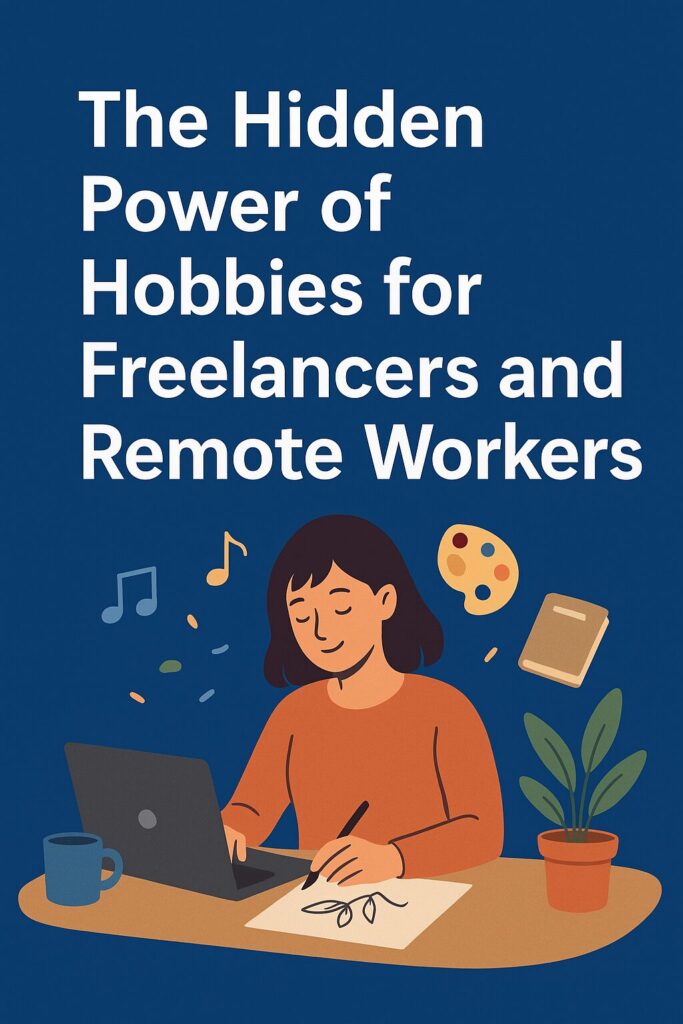
When you work from home it can feel like one day blurs into the next. Without the natural breaks of commuting, co-workers, and external structure, your mind and body start to crave something to anchor your time and energy.
The power of hobbies can be that anchor—giving you a reason to pause, reset, refresh and refocus when it’s time to get back to that latest project.
The right pastime can sharpen focus, lower stress, and spill into your professional performance in surprising ways. It’s not just about distraction; it’s about weaving balance into your daily fabric.
When approached with intention, hobbies become a quiet form of resistance against burnout. You give yourself permission to live beyond deadlines. And in the long run, that choice keeps your work sharper and your well-being steadier.
The Power of Hobbies and Creative Rituals
Creativity isn’t a one-off event; it’s a muscle you build over time. The trick is to stop waiting for inspiration and instead treat it like daily practice, scheduling it into your calendar as you would a meeting. That’s when ideas start to show up reliably, not just in bursts. As this Canadian perspective on building a creativity habit explains, it’s the rhythm of showing up that rewires your brain, not the pressure to produce a masterpiece each time.
Whether you sketch for fifteen minutes over coffee or write a single paragraph before bed, small, repeatable acts build momentum. Over weeks, this moment transforms into a steady current that fuels both personal satisfaction and professional insight.
The secret isn’t in how grand your output is—it’s in how faithfully you return to the workbench, notebook, or easel.
Personal Skills Can Become A New Source of Income
Some hobbies don’t just recharge you—they can also open doors to new income streams. If you have a skill that others want to learn, you can think about hosting courses on your website as a way to combine passion with profit.
Teaching forces you to clarify what you know, break it into steps, and connect with people who value your expertise.
For freelancers, this isn’t just side money—it’s a marketing tool that positions you as an authority in your field.
For remote workers, it’s a chance to build something independent of your primary job. And in both cases, it turns personal enjoyment into a sustainable, self-directed venture.
Movement That Fits Desk Days
Long hours at a desk can turn your body into something it was never meant to be: static. Movement breaks help to restore circulation and wake up your brain. Instead of high-intensity routines that are hard to sustain, look for something that blends effort with ease—like a low-impact strength–cardio combo you can adapt to your environment.
Rucking, for example, uses weighted walking to build endurance and strength without the pounding of running. A weighted backpack and a pair of comfortable shoes can turn your neighborhood into a training loop. It’s a way to train that doesn’t demand a gym or complicated setup, yet still delivers that post-movement clarity and steady energy your workday craves.
Language & Cognitive Hobbies
Your brain thrives on challenges. Learning a new language, playing a musical instrument, or mastering complex games keeps cognitive pathways sharp.
The key is to stack tiny, repeatable wins so progress feels tangible. Apps and systems that track streaks work because they tap into our need for visible achievement.
Five minutes of daily vocabulary review or one song’s worth of scales might seem trivial, but the compounding effect is powerful. It’s about training your mind to stay curious and resilient. Over time, you’ll notice the same mental flexibility showing up in how you solve problems at work or adapt to unexpected changes.
Nature As A Reset
The outdoors has a way of recalibrating perspective. Even brief exposure to natural environments can lower stress hormones and restore focus.
If you’re new to nature-based hobbies, it helps to start with nearby birds rather than planning elaborate hikes. Birdwatching requires no special fitness level and only minimal gear—binoculars if you want them, a notebook if you like keeping track. You begin to notice seasonal changes, subtle shifts in sound, and the patient rhythm of the non-digital world.
Those moments of quiet attention bleed into the rest of your day, tempering the urgency that work can impose. You return to your desk a little different—slower, in the best way.
Cooking As Flow Training
Cooking isn’t just about feeding yourself—it’s a form of structured creativity that demands focus and timing.
When you set up mise en place before you begin, you’re giving yourself the mental space to work in flow. Chopping vegetables, measuring spices, and lining up tools becomes a warm-up for the mind.
The process builds discipline in sequencing tasks and anticipating needs, both of which mirror the mental skills that make remote work smoother. And there’s the sensory reward: the smell, the texture, the taste at the end.
Cooking anchors you in the present moment while subtly training you to manage complexity with grace.
Social Hobbies & Accountability
Isolation can creep up on remote workers and freelancers, often without warning. Building a hobby around other people’s involvement creates a natural counterweight.
Whether it’s a book club, a pickup sports league, or a volunteer group, the structure helps you commit to a recurring cadence that’s easy to keep.
The accountability isn’t about pressure—it’s about having others who expect you to show up. That shared rhythm strengthens social bonds while also giving you something to look forward to beyond work.
Over time, the connections you make in these spaces can become as vital to your resilience as the activities themselves.
Hobbies aren’t luxuries for people with “extra” time—they’re strategic tools for sustaining yourself in a work model that can easily erode boundaries. By committing to small, consistent actions in creativity, movement, learning, nature, cooking, or community, you’re building more than skills. You’re constructing guardrails that keep your energy from bleeding entirely into your professional output. The variety keeps you balanced, while the rhythm keeps you anchored.
Even the simple act of showing up for a hobby can ripple back into your work in sharper focus, steadier nerves, and more inventive thinking. Over weeks and months, these habits accumulate into a kind of quiet power—a resilience that isn’t flashy but is deeply felt.
Unlock the secrets to thriving in the remote work world with Remote Office World, your go-to resource for expert tips, tools, and inspiration to elevate your freelance journey!