How to Land Your First 3 Freelance Clients in 30 Days (Without Needing a Big Portfolio)
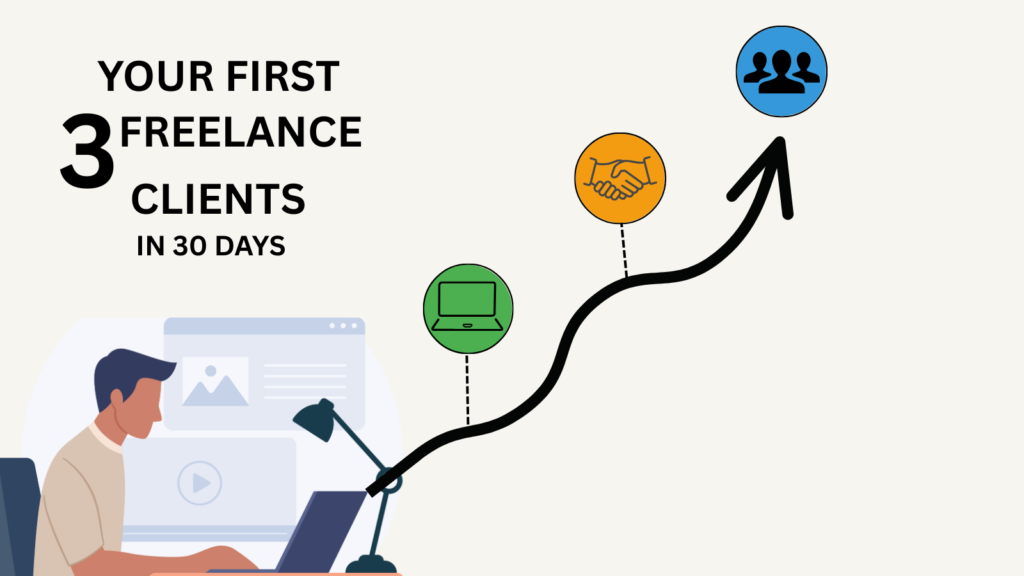
Landing your first 3 freelance clients in 30 days is not just possible, it will happen if you follow my proven formula.
If you’re feeling a little lost and not sure where to start I get it. That’s normal.
11 years ago I was lost at sea.
The unpaid bills were piling up and I needed to make some extra cash fast so I decided to give freelancing a go. The problem was, I had no idea where to start.
I had no formal writing experience (Other than school papers). Who was going to hire me with no experience?
If this story sounds familiar and you’re sitting there wondering how to get started, this article’s for you.
Finding those first few clients can be a challenge — you’re competing with hundreds of other new freelancers with the same idea as you.
How do you separate yourself from the crowd, stand out and attract those paying clients?
Hard work and consistent effort is a good start, but you also need the right strategies and you need to know where to find those paying clients.
I’m going to show you the right way to launch (or boost if you’re already a struggling freelancer) a successful freelance career.
I’ll reveal actionable strategies to get you past the hurdles common for new and struggling freelancers and achieving real results that make you money.
If you follow the methods outlined below, you’ll be setting the stage for a long and successful freelance career.
Let’s get started!
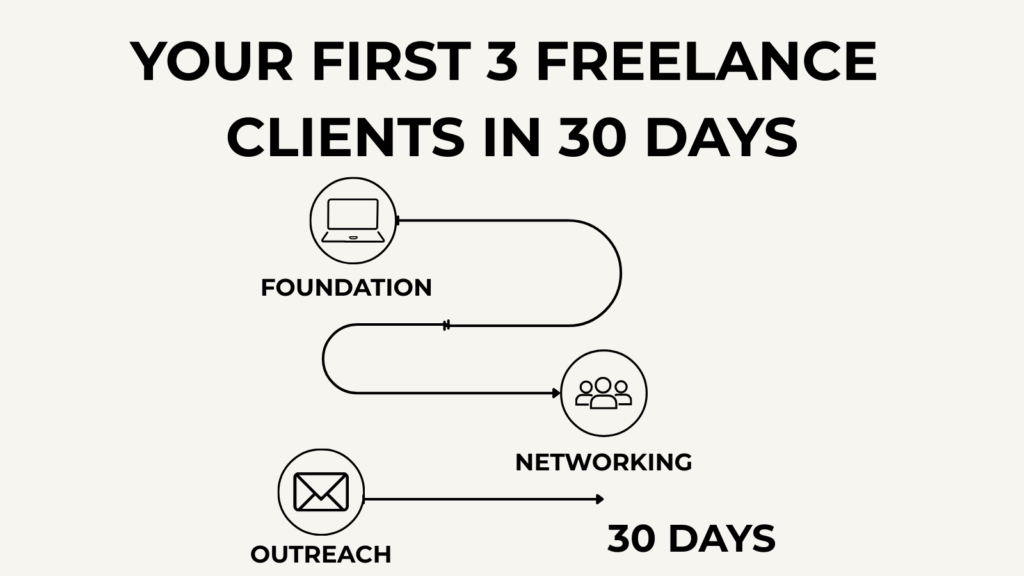
Section 1: Foundation for Freelance Success — Preparation is Key
Before Hunting for Your First 3 Freelance Clients Build Your Base
While it’s tempting to jump right in, join a site like Upwork and blast away with your client hunt, that’s a mistake.
That’s what I did and it took me months to land my first client on Upwork (Elance at the time).
I had no plan and no strategy.
I just started applying for random jobs hoping something would land. Crickets.
The “cowboy approach”, as I like to call it, doesn’t work.
You need a strong foundation first.
Defining Your Niche & Ideal Client
The first two questions you want to ask yourself are who do you want to work with and what problems can you solve for them?
This is so important.
If you skip this step your chances of landing good clients isn’t much more than zero.
I don’t say this to scare you, but I don’t want you to make the same mistake I did by jumping in without a plan and struggling for weeks on end trying to land a client.
Start by asking yourself the following questions:
- Where do my ideal clients look for solutions to their problems?
- What do they look like — think age, where they live, their interests, and their income levels.
- What are your competitors providing them and how can you do it better, or even fill a gap in the market that no one else is offering?
The goal here is to get inside your clients heads. Niche down and start to understand them better.
That way when you do start to pitch, you’ll be using their language and offering real solutions they can use.
If you can do that, your messaging will come across as powerful and your chances of landing them as a client just increased 10X.
Build A Professional Online Presence
You won’t be seen as credible if you don’t have a professional online presence. Period.
That might sound harsh, but the freelance landscape is competitive.
It doesn’t matter whether you’re building a backyard business or multi-million dollar company, you need to be easily discoverable online.
Your online presence will become your always on 24/7 storefront for your freelance career. It’s critical to have a consistent personal brand that cries out to the world that your a true professional and you’re ready to work.
At a minimum, you should have:
- A polished professional portfolio, showcasing your best work (You can write your own samples to start).
- A standout profile on Linkedin that focuses on your unique skills and highlights what you have to offer your ideal clients.
- An account on X (or other social media platforms relevant to your niche) where you regularly engage and connect with potential clients.
- Professional contact details (that means no [email protected]!). It’s best to set up a dedicated email address for your freelance work, to help keep your work mail and personal mail separate.
- Standard hours of availability — take the guess work out, make it clear to potential clients when you’re available and how much time you can realistically dedicate to projects.
Building A Freelance Portfolio (Even Without Experience)
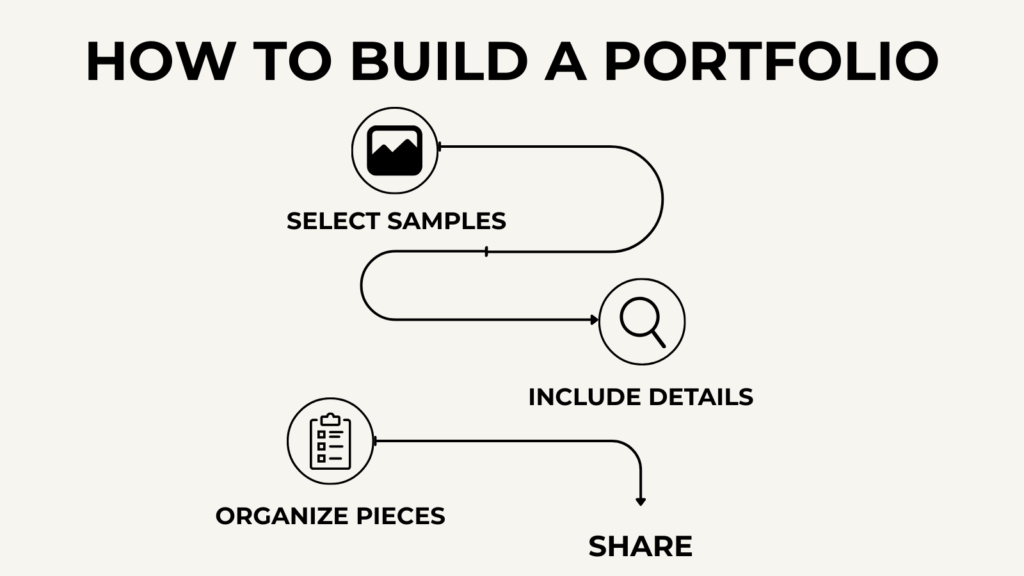
Don’t feel stuck because you don’t have any samples to put in your portfolio yet. Create them!
Everyone has to start somewhere.
My portfolio started with a bunch of articles I posted on a free website on the Blogger platform. At first they weren’t that good, but eventually my writing improved and so did the articles on my free site.
It was those articles that helped me land my first 3 paying clients!
You can absolutely build a professional portfolio that impresses potential clients without paid experience.
A free website is just one way. You can also:
- Create mock projects just for your portfolio in Google Docs or Word.
- Offer free work for family or friends with a website.
- Reach out to local businesses or charities and offer to provide free work in exchange for positive testimonials.
- Apply for guest post opportunities in your niche and offer a free article if they’re willing to add your author bio to their site and a link back to your portfolio.
Now that you’ve built a professional online presence, what comes next?
It’s time to start networking!
Section 2: Tap into The Power of Your Inner Circle
Start Building Your Network from Familiar Faces
It always gets me when I here a fellow freelancer say they have no idea where to start when it comes to building a network.
Huh?
What about your friends, family, coworkers, former coworkers, casual aquaintances?
Who knows, you may already know your first big client!
Chances are, the people you know will be more than happy to help. Even if they don’t have any opportunities for you, they might know someone who does.
Let’s call this your extended network — once removed.
Spread the Word About Your New Freelance Career
Back in 2014 when I was starting out I was reluctant to tell anyone of my plans.
What if I sucked as a writer? How embarrassing would that be?
Newsflash.
Nobody is the world’s best freelancer when they start out.
It doesn’t matter whether you’re a writer, social media manager, website designer, artist — whoever. Chances are, your first few projects aren’t going to be you best work.
That’s why it’s a good idea to start today with those practise projects, posting on your free Blog in the obscure corners of the internet.
The more you practise. The better you’ll get.
And don’t be afraid to spread the word! Heck, shout it from the rooftops!
Say it with me now, “I want to be a freelancer!”
Feels good right?
Let everyone in your circle know that you’re launching a new venture. Start by:
- Telling friends and family what your business is and who you plan to help. Even if they don’t understand what UGC is (or whatever your niche lingo is), by telling them about it you’re starting your journey! Practise pitching with them, make them understand what a great service you offer.
- Then ask them to become your advocates. These are your people — if they don’t have your back who does? I can tell you with confidence, they’re going to be happy to help spread the word!
- Next, tap into your social media connections. People you met online. Right after you finish reading this article (Not now! Keep reading so you don’t miss anything), type up a post, send it out on Facebook, X, Linkedin, Whatsapp, wherever you hang out. Let everyone know, YOU are a freelancer!
Reach Out to Former Employers & Colleagues
If you’ve ever had someone tell you to be careful not to burn any bridges, there’s good reason for that — it’s good advice!
Maybe your former boss needs a website redesign, but she’s not sure how to go about it. Or perhaps a former colleague has a cousin looking for a blog writer to help promote their business.
The point is, you never know where that first opportunity is going to come from. Don’t discount any potential contacts.
Networking is such a powerful tool and most of us don’t tap into half of what we could.
Section 3: Exploring Online Platforms and Digital Marketplaces
Building Beyond Your Network — Meeting Clients at the Source
Your network is just a starting point.
It can be a powerful tool, but you can’t stop there.
There are thousands of clients already actively looking for freelance help. Right now as you’re reading this article somebody’s posting for help on a freelance platform or their social media network.
It’s time to take a close look at the online platforms and digital marketplaces.
How to Use Freelance Marketplaces Strategically
If you follow any freelancers on X, TikTok or Youtube, chances are you’ve heard some dire warnings about Upwork, Fiverr, or countless other job sites.
Yes, they can be a race to the bottom with low paying rates and nightmare clients.
But I’ll let you in on a secret about these platforms. There are also some great clients who pay well!
I’ve worked with dozens of great clients through Upwork over the years, and while it isn’t my go to source for work these days, it was a great place to get started.
Don’t dismiss them outright, just learn to spot the warning signs of bad clients and low paying jobs.
Here are a few strategies you can employ when using these sites:
- Look for clients with a good reputation that are willing to accept new freelancers. The rates still might not be great for these types of clients, but it could be an opportunity to make a little money while building up that portfolio.
- Create an eye-catching profile if you want to stand out even with no experience. Provide links to those samples you created. Remember, if you don’t have samples in the niche you want to work in, create them! Also, remember to tell the client what you can do for them in your profile — don’t focus too much on yourself. Let your samples do the talking.
- Don’t use generic, copy and paste messages for Proposals. It’s okay to use templates, just remember to customize them for the job your applying for. Your proposal should address the clients needs directly (Hint: they’ve already outlined them in the job posting!) and make it clear how you will solve their problems.
- Set your minimum rate and be willing to walk away. Yes, it’s okay to accept lower rates in the beginning as you’re looking to gain experience, but you still have to put food on the table. Never agree to free samples on these platforms — in fact, these types of requests violate Upwork and similar platforms terms of service. Figure out the lowest rate you can live with and use that as a starting point for all projects.
- Read jobs Carefully. Some clients are very specific with their instructions — they know what they want. If your proposal doesn’t address the pain points they’ve mentioned in their posting, they’re not going to hire you. By simply addressing each detail mentioned by the client in their request for proposals, you’re already ahead of 90% of other freelancers applying for that job!
- Show your authority. Just because you’re new to freelancing, it doesn’t mean you’re not an authority in your niche. That’s why those samples from your personal blog or the charity work you’ve done for free are so important. Share them and make it clear how they demonstrate what you have to offer the client.
- Always lead with value. When you answer a job posting, start with a quick tip or advice. If you’re able to, visit the potential clients site before submitting your proposal — do it! Remember to always keep it positive (Don’t tell them their website sucks!), but let them know about a tweak you could make or an article you could write for them that would increase their conversions ten fold! Less than 1 percent of freelancers take this approach, so it instantly places you at the head of the pack.
- Have a plan for growth. Platforms like Contra and Upwork can be a great starting point if used correctly. They shouldn’t be your long-term source for freelance clients. Just a stepping stone (And they’re great for dry spells!). Start right away learning how to find and develop off-platform leads.
Linkedin — A Freelance Networking Goldmine
LinkedIn isn’t just a place to post your online resume and connect with people in your industry. It’s a goldmine for freelancers! At least it can be, if you take advantage of it.
Start with these:
- Optimize your profile heading so that your value proposition is clear. Don’t just say that you’re a freelancer. Be specific. For example, “I’m a content writer helping businesses in the travel sector grow through strategic use of SEO and on-brand storytelling.”
- Use your platform well. Share value driven posts that offer advice and tips, case studies and insights from your journey. This all helps to build your personal brand and establish trust in what you have to offer.
- Consistently engage with your Linkedin network and potential clients. It doesn’t matter how good your content is if no one knows you’re there. Pitching comes later. First, you need to comment, communicate and above all, do it consistently!
- Be proactive. As a hiring network, there are always opportunities posting on the platform. Seek them out and engage in groups were people in your niche frequent.
Visual Platforms Like Instagram, TikTok and YouTube
Instead of doom scrolling through visual platforms like Instagram, use them as another tool in your freelance arsenal. If you’re into design, art or other creative outlets, they can be a great place to discover potential clients.
- Create a dynamic and visual profile. Instagram is a great place to visually showcase your work (Pinterest is another option) and capabilities through posts, reels, and stories. This is where the idea of show, don’t tell really has meaning!
- Show them behind the curtain. Don’t just share work samples. Get creative. Show them behind the curtain. Be willing to be a little vulnerable by sharing your process, offering tips and use every opportunity to demonstrate your value to potential clients.
- Build your community. On platforms like TikTok and Instagram you’re playing the long game. First build your community and show that you’re a valuable member of that community. This will boost your visibility and your credibility. Finding clients will happen naturally if you’re sincere, honest, and good at what you do!
- Consistency is key! It takes time to build on social media, no matter what the platform. You have to be consistent over an extended period of time. Don’t be afraid of direct messaging and keep the content flowing!
Section 4: Cold Outreach — Knocking on Real & Virtual Doors!
Breaking the Ice: Direct Outreach & Real-World Connections That Land Clients
I used to get cold sweats any time I heard the terms cold emailing or cold pitching.
I didn’t even give the idea serious consideration until I was about 5 years into my freelance career. That’s how much the idea scared me.
I get it!
You want to know the truth?
It’s not that bad.
Sure your first few rejections sting a bit, but you get over it. Hey, you can’t win them all right?
Think about it.
Even if you only win one client for every 100 cold pitches, you’re still going to build a successful freelance career if you do it consistently. Don’t be afraid to knock on those doors — both physical and virtual!
It’s All About Starting A Conversation
Learning how to start a conversation through cold emails or in person cold pitching is a bit daunting.
Of course it is.
Think how you felt on that first day of highschool. It’s kind of like that.
The best part though? It gets easier!
In fact, I can say confidently it’s much easier than navigating the treacherous waters of high school as a freshman!
When you do it right, it can be highly effective.
If you’re not sure where to start try my 3 free cold email templates as a launch pad. Just remember, you still have to do your homework on the potential client and personalize them for their business.
Consider these key items when dipping your toes into the water of cold pitching:
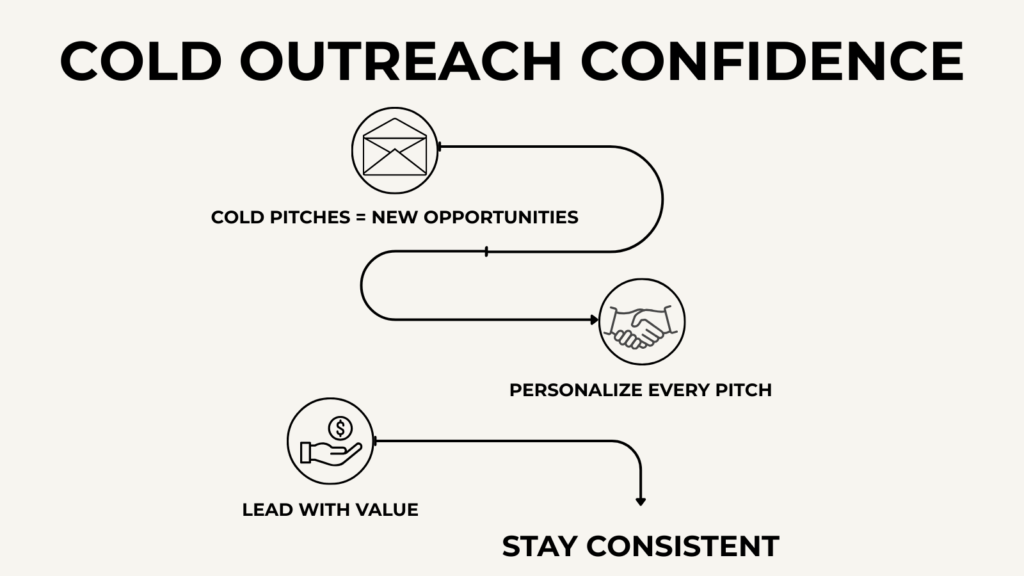
- Always do your homework — Researching the companies you plan on reaching out to is critical. That way you can personalize your pitch to them. Address their pain points. Show them how you can solve them. Generic, cookie cutter approaches never work.
- Remember to lead with value — In you’re research look for clues for how you can help your potential client save time, money or effort. Free tips or advice are almost always well received.
- Realize you have nothing to lose — One simple realization made it much easier to send cold emails for me. What was it? Recognizing I had nothing to lose! Worse case scenario, you don’t win the client and you’re no worse off than you were before. If you don’t ask, the answer is already no. But with persistent cold emails and cold calls, there’s a good chance you will land new clients you would never have without using these techniques.
- Consider breaking the ice with a free offer — Most people like free stuff. So when you offer someone your cold pitching a free project to get your foot in the door, there’s a good chance they’ll say yes. Even if they don’t hire you, you’ll have another piece for your portfolio and the potential for another testimonial.
Networking and Real World Connections
The simple fact is people prefer to work with people they know. It doesn’t have to be a long-term association either. Clients that have met you, even once, face to face feel more comfortable hiring you as a freelancer.
Here’s the how and why:
- Leave the computer for the real world and get a leg up. The overwhelming majority of freelancers never look further than their laptop screen to find clients. By attending network events, working in coffee shops, taking daily trips to the gym and working out of co working spaces, you’re exposing yourself to new opportunities that most of your competitors will never tap into.
- Choose collaboration over competition. Consider working with other freelancers and sharing contacts. You might be a blog writer that works with copywriters, or a logo designer that works with website builders. There are countless opportunities to collaborate if you’re willing to look for them.
- Physical meetings with clients can go a long way. It might not be practical if you live on opposite ends of the world, but if you have clients that are local, why not meet them face to face? Talking shop over a cup of coffee or a glass of wine can be a major difference maker that lands you that dream client.
Section 5: Switching on Your Winning Mindset & Developing the Metrics for Growth
Towards Sustainable Growth & Long-Term Success
When you land that first, second and third client it’s going to feel like a huge weight off your shoulders, but you can’t rest there!
You have to think about the future from day one if you want your business to thrive. That means having the right mindset, continuous learning and the ability to develop and build success metrics.
Freelance Success Is a Numbers Game: Know Your Metrics
I’m not suggesting that you have to be a math whiz, but it pays to understand your metrics in terms of freelance success:
- Keep track of your number of pitches vs. the number of clients you actually close. This will tell you your close rate. If you find its very low you can adjust your approach. If you don’t track it, you’ll never know what’s working and what isn’t!
- Track your messaging. Improvements are usually incremental, but by tracking your messaging from day one you’ll learn what works and what doesn’t. That information will be invaluable to you as your freelance business grows.
Over time one simple equation always rings true:
Small Incremental Changes = Big Results Later
Resist the temptation to make major changes if you’re not seeing the results you want.
Continue to track your progress and tweak your techniques as you go.
I can tell you based on my own experiences, you will be surprised how much progress you’ll make in the next 6 months. You just can’t see it right now.
Yes you can probably win more clients by increasing the number of pitches you make, but it’s a lot easier to get better at pitching and improve your close rate. That only happens if you’re tracking your metrics.
Think about it.
If you can improve your close rate from 5 to 10%, for every 100 pitches that’s an extra 5 clients! Without doing any extra work. All you’re doing is improving your technique.
Keep practising and consistently marketing your services every day and you will get better. I sometimes look back at what I was doing 5 years ago and shake my head at how bad I was at pitching!
Consistent Outreach Wins Clients and Makes You Money
As tempting as it may be, don’t rest after you’ve won those first 3 clients.
Any freelancer that’s been in the game for more than a year will tell you, good times come and go.
The industry is famous for what’s known as the “feast or famine” cycle.
The best way to avoid the famine is through consistent effort.
Be sure to schedule daily sales activities. Even 30 minutes a day can be the difference between success and failure.
Set that time to send emails, make calls, conduct research, be active on social media and reach out to your network.
When you perform these tasks daily, you stand a better chance of avoiding the droughts that are common in the freelance world.
Use Tech Wisely and Build a Support Network
In a world of free AI tools and easy access to virtual support networks, why would you want to be a lone wolf?
You might not have the budget for a virtual assistant now, but when you do it can be a game changer when it comes to scalability.
As you take on more clients and grow your business, hiring a virtual assistant for the mundane aspects of freelance life allows you to focus on your core competencies and that will only improve your bottom line.
Also, sales software and CRM tools can be helpful, such as:
- Reply
- Pipedrive
- Trello
- Boomerang for Gmail
There are countless tools out there that make freelance life easier. You don’t have to do it all by yourself, even if you want to remain a solopreneur.
Automate Client Acquisition: Develop an Inbound Lead Generation System
Consider this, if you consistently pump out content on your own site, or sites like Linkedin and Medium you’re adding to your online visibility.
If you create great content for your own site consistently, that’s optimized for the search engines, there’s a good chance clients will find you!
SEO can be a powerful tool.
You’ve probably heard the term passive income, well it’s kind of like that. Potential clients that find you through your online body of work are passive leads. That’s gold!
Imagine getting the majority of your new clients through Google, not by sending emails!
It is possible by creating content that’s focused on your potential clients pain points and by ranking on the first page of the search engine results pages (SERPS).
If you create this kind of content consistently over time you will grow your client list. Yes it takes time, but it’s worth the effort!
Be Persistent and Resilient
Freelancing can be frustrating, but it can also be one of the most rewarding experiences on the planet!
It really is a marathon not a sprint. Remember these 4 things on your journey:
- Never give up! You will fail, over and over again. That’s just how it works. Freelancing can be hard and it can be frustrating. Stay patient and stay consistent and you will succeed.
- Treat every contact as an opportunity. You might not close the deal this time, but if you create a good first impression it could lead to future work or that cold email may lead to a referral!
- Everyone has to start somewhere. Success doesn’t happen overnight. Believe me — I speak from experience! Even the most successful freelancers started with one client.
- You are a salesperson and marketer. If you’re in business for yourself, you have to wear a lot of hats. Even if you’re just a solo freelancer. You can’t just be good at creating amazing content and offering great service. It’s your job to sell and market those creations and services as well.
Your Journey to Freelance Success Starts Now
Our journey has covered a ton of material.
We’ve explored proven strategies for finding clients such as leveraging your existing network, building on online platforms and growing your personal brand.
We also talked about proactive outreach and developing a growth mindset.
If you follow the suggestions I’ve outlined above and apply consistent effort from day one, you will score your first 3 clients in 30 days or less.
It isn’t about luck, it’s about visibility, consistency and making connections!
You now have the toolkit for freelance success and if you follow it, you will succeed.
Start today. Start now.
Choose one of the tools outlined in this article today and work on it until it’s second nature. Then work on the next, and the next and keep going!
I can’t wait to hear about your success!